Oxford and Cambridge New York City Boat Race
Dinner Committee By-Laws
March 28, 2019
I. Preamble
1. The Oxford and Cambridge New York City Boat Race Dinner Committee (“BRDC”) has existed since 1933. The BRDC’s main event is the Boat Race Dinner, which started in 1933 and is held each year in April around the time of the Oxford and Cambridge Boat Race in England. In the future, BRDC may also facilitate networking opportunities for Oxford and Cambridge alumni who live or work in the metropolitan area (New York, New Jersey, and Connecticut). The Boat Race Dinner will remain BRDC’s main event.
2. Many Oxford and Cambridge alumni from around the world live in the metropolitan area. As these individuals are looking to connect with each other, cultivate professional networking opportunities, and become involved with worthwhile causes, and stay in touch with their Universities, there is a need for an organization (less formal and structured than the University alumni offices) to facilitate such opportunities. In addition to holding the Boat Race Dinner, BRDC will plan other social events for Oxford and Cambridge alumni in its designated geographic area while encouraging participation beyond its core geographic area. BRDC will not supplant or duplicate the work of the Oxford and Cambridge alumni offices. Instead, it will work in coordination with those two offices to promote the Universities.
3. The undersigned current Committee members have adopted these By-Laws to provide more structure to the BRDC’s operations, to guide its operations in the future as it grows in membership and functions, and to institutionalize its practices. The objectives of BRDC are to encourage Oxford and Cambridge alumni to maintain active friendships and relationships with one another, the Universities, their Colleges, and other related organizations.
4. The BRDC is an autonomous group recognized by the Universities of Oxford and Cambridge. BRDC is operated by a Committee of volunteers. All alumni of Oxford or Cambridge in the metropolitan area are nominal or at-large BRDC members and are eligible for BRDC Committee membership. [“Nominal” members are those with a strong connection to either University, illustrated in Article I (1) below, but no earned degree from either; “at-large” members are those who matriculated at either University, but are not earned-degree recipients or Committee members (who must be earned-degree recipients for active membership).] BRDC’s programs, activities, and outreach will take place primarily in the New York-New Jersey-Connecticut area. In cooperation with and support from the Universities’ alumni offices, BRDC intends to provide a focal point for meetings and social events for meetings among alumni through programs where all alumni can gather and share their experience of Oxford or Cambridge.
5. BRDC fully supports the values of the Universities of Oxford and Cambridge and their alumni relations efforts. BRDC will work with the University of Oxford North American Office and Cambridge in America in New York City to arrange events, host visiting scholars, provide publicity, and find suitable venues for events.
6. Events will be organized to maximize attendance, minimize costs, and limit financial exposure or liability to BRDC, its Committee members, the Universities of Oxford and Cambridge, and their alumni relations offices.
7. BRDC will aspire to organize activities and events that meet the high-level of educational and professional standards and experience of its constituency and that are educational and fun, provide alumni having the shared experience of Oxford and Cambridge an opportunity to know each other better, and promote active involvement with BRDC.
8. BRDC will work to build and maintain the reputation of the Universities of Oxford and Cambridge within the metropolitan area and encourage a spirit of community, belonging, and inclusiveness among those who have studied, taught at, or are otherwise associated with Oxford and Cambridge.
9. BRDC may engage in activities that benefit current and/or prospective students of the Universities of Oxford and Cambridge, such as outreach to universities, colleges, and schools (for undergraduate and graduate programs), student bursaries, or career mentoring.
10. BRDC is a non-profit informal association of individuals who have organized for educational and charitable purposes. It has no formal legal status. BRDC will not compensate its members and others participating in its programs other than for out-of-pocket expenses approved by BRDC in accordance with its internal operating rules and policies.
II. Membership
1. Anyone who matriculated at the Universities of Oxford and Cambridge and lives in any of the three states of the metropolitan area is automatically an at-large member of BRDC. Those with a strong connection to Oxford and Cambridge (e.g., a tutor, lecturer, visiting fellow, or honorary degree recipient) are also at-large (nominal) members. All at-large members are entitled to receive information about BRDC programs and to attend such programs on terms stipulated by BRDC. Committee members of BRDC, all at-large BRDC members, their spouses, partners, and relatives and friends may attend programs sponsored by BRDC on terms stipulated by the BRDC Committee.
2. Spouses, partners, parents of past or current students, friends of alumni, and those with an active interest in BRDC, Cambridge, and Oxford are encouraged to participate in activities and social events sponsored by BRDC.
3. BRDC, in accordance with its Committee’s internal operating rules and policies, may create other affiliation or membership categories such as for non-matriculated Junior Year Abroad students and Oxford and Cambridge summer program participants.
4. BRDC at-large members will be notified of events and updates by one or more channels: email, social media (Facebook Page or Group), and U.S. mail. The BRDC Committee has established a FB Group to which all at-large members are invited to join. Joining the BRDC FB Group and/or attendance at BRDC events grants BRDC permission to use photographs and the likeness of program attendees in its social media and other marketing and promotional activities. Anyone who wishes not to grant permission for such use is required to advise BRDC in a written communication to the Chairperson of BRDC.
5. Effective means of communications strategies are critical to the success of BRDC and require regular review and updates by BRDC with the involvement of at-large members. All members are strongly encouraged to keep the BRDC Committee informed of up-to-date and current best means of communicating with such member and to provide comments to the BRDC Committee regarding its communications strategies. Communications regarding up-to-date contact information should be sent to the Chairperson of the Committee Membership Sub-Committee. Communications regarding BRDC’s various communications strategies should be sent to the Chairperson of the Social Media and Communications Sub-Committee.
III. Governance
1. BRDC will be governed by an alumni Committee of no more than fifteen (15) active members, excluding emeritus, emerita, and ex officio members. All former BRDC Committee Chairpersons shall continue to serve, at their pleasure, as Committee members emeritus or emerita. Emerita and emeritus Committee members have the right to vote and are excused from the meeting attendance requirements. Whenever these By-Laws require the vote of all Committee members, emeritus and emerita members must be included in the total membership. The BRDC Committee members shall be elected by all eligible at-large (excluding nominal) members of BRDC at the annual meeting from among the qualified members nominated by the Committee or independently proposed by at-large (excluding nominal) members.
2. As a group representing both Universities, the membership of the BRDC should reflect substantial representation from each University. Accordingly, Committee members should strive diligently in good faith to encourage alumni from both Universities to seek election to Committee membership and to participate in the work of BRDC.
3. The BRDC Committee shall have a Chairperson, a Vice Chairperson for Operations (serving as Boat Race Dinner Speaker Sub-Committee Chairperson), a Vice Chairperson for Finance, and a Secretary (also serving as Committee Membership Sub-Committee Chairperson and Sergeant-at-Arms). These four officers shall be elected by majority vote of the Committee members at a duly noticed Committee meeting to be held after Committee members are elected at the annual meeting. The Chairperson, with advice and consent of the other three elected officers, shall appoint an Events Officer (serving as Boat Race Dinner and Programming Sub-Committee Chairperson), a Member Outreach Officer (serving as Social Media and Communications Sub-Committee Chairperson), and a Guest Outreach Officer. Other positions or committees, as needed, may be created by the BRDC Committee members.
4. The BRDC Committee may include two specialized positions: Schools Outreach Officer and Young Alumni Officer.
5. The BRDC Committee may, as needed to assist with its work, include several at-large or nominal members in its various sub-committees, the number of whom to be determined by the BRDC Chairperson in consultation with the relevant Sub-Committee Chairperson.
6. BRDC may invite matriculated members of other Oxford and Cambridge affinity groups without a University degree (e.g., American Association of Rhodes Scholars, Marshall Scholars, etc.) to join its Committee as ex officio members without vote.
7. All BRDC Committee members must have received an earned degree from the University of Oxford or Cambridge. Each University, as appropriate, will be asked to confirm this fact before a member is invited to join the BRDC Committee. BRDC Committee members must agree to be bound by the alumni relations policies of the Universities.
8. All BRDC Committee members must live or work within the three-state metropolitan area.
9. The Chairperson, other BRDC officers, and Committee members are encouraged to promote the Universities and BRDC within their educational and professional networks, including other educational establishments and past or present employers.
10. Because of the small size of BRDC active Committee membership, members must attend as many Committee meetings as practicable, in person or by teleconference. Members should notify the Chairperson or Secretary when unable to attend a meeting. Members with multiple unexcused absences (i.e., in excess of three consecutive meetings) may be asked to step down. Committee members are expected to contribute their time and efforts to all BRDC programs and to help promote the financial success of the Boat Race Dinner, including buying and selling tickets.
IV. Officers and Duties
1. Chairperson. The Chairperson is primus inter pares and presides over all meetings, including the Annual General Meeting (AGM). The Chairperson is responsible for the orderly running of BRDC in close cooperation with the officers and Committee members. He or she must ensure the smooth administration of meetings, full participation of attendees, and consideration of all viewpoints. The Chairperson has one vote (as does every member), but in cases of a tie at any BRDC Committee meeting his or her vote is outcome-determinative, except in the election of Committee members and officers. The Chairperson is the primary liaison with the University alumni offices. The Chairperson or his or her designate(s) will represent BRDC to the general public, organizations, and alumni groups. In consultation with BRDC members, the Chairperson may appoint special sub-committees of BRDC members, including at-large and nominal members, and assign specific duties to such sub-committees as appropriate.
2. Vice Chairperson for Operations. The Vice Chairperson for Operations, after consulting the Chairperson, shall be responsible for identifying and inviting the four speakers at the annual Boat Race Dinner. The Vice Chairperson for Operations will preside over Committee meetings and the AGM in the Chairperson’s absence. The Vice Chairperson for Operations will serve as interim Chairperson in the event of a resignation or prolonged absence of the Chairperson. If such absence is to last for more than six months, the Committee must hold a special election to select a replacement for the Chairperson.
3. Vice Chairperson for Finance. The Vice Chairperson for Finance acts as BRDC’s chief financial officer and is responsible for overseeing BRDC’s income and expenditure. The Vice Chairperson for Finance will maintain the BRDC banking account and will be one of the two required signatories (the other being the Chairperson) on any checking account established by BRDC; any expenditure above USD $5,000 will require the signatures of both the Chairperson and Vice Chairperson for Finance. The Vice Chairperson for Finance will use best judgment to advise the BRDC of financial issues, including spending and fundraising patterns. The Vice Chairperson for Finance may research and shall make recommendations to the BRDC Committee on whether to charge and, if so, the amount to charge for events. The Vice Chairperson for Finance will prepare the financial report for the BRDC Committee and any annual report required by the University of Oxford North American Office and Cambridge in America. For all programs, including the Boat Race Dinner, requiring expenditure of Committee funds, the Vice Chairperson for Finance must approve all budgets before the Committee considers and grants its approval for such programs.
4. Secretary. The Secretary is responsible for meeting minutes, recording votes at regular or special BRDC Committee meetings, and the AGM. The Secretary is responsible for safekeeping of BRDC Committee files and official correspondence. The Secretary will serve as Sergeant-at-Arms, ensuring there is a quorum for meetings and votes, and will issue final decisions on meeting procedures and protocols. The Secretary will send notifications of meetings, the AGM, and proposed By-Laws amendments in a timely manner. The Secretary will also work with University event organizers to help find appropriate venues for meetings, provide refreshments (if applicable), and coordinate setup and breakdown. The Secretary will serve as Chairperson of the Committee Membership Sub-Committee, acting as the Chief Data Officer, maintaining membership contact details and other important BRDC Committee operations data.
5. Committee members shall take reasonable action to protect personal data received from all members (at-large and nominal) and other event attendees and guests. However, the Chief Data Officer of the BDRC and all other BDRC members, appointed or elected, shall not be liable, financial or otherwise, for any monetary or personal injury resulting from the loss of data voluntarily provided to the BRDC, including any consequential losses incurred due to such loss of data, provided the Chief Data Officer complied with reasonable measures to safeguard such data.
6. Executive Committee. The Chairperson, Vice Chairperson for Operations, Vice Chairperson for Finance, and Secretary shall form an Executive Committee (EC) to be presided over by the Chairperson. Emeritus members are ex officio members of the Executive Committee with the right to vote on any matter before the EC. All proposals to amend these By-Laws must first be considered and recommended to the BRDC Committee by the EC. The BRDC may delegate to the EC for its consideration and recommendation or for final action any issue, except that the EC shall not have authority to make a final decision on an amendment of these By-Laws, elimination of the Boat Race Dinner, or dissolution of BRDC.
7. Events Officer. The Events Officer acts as BDRC's Chief Event Planner. The Events Officer will be responsible for forming and chairing a sub-committee (Boat Race Dinner and Programming Sub-Committee) to solicit venue bids, negotiate event invoices, consider programming options to present to the BDRC Committee, and conduct other event operational tasks.
8. Member Outreach Officer. The Member Outreach Officer acts as BRDC’s Chief Communications Officer. The Member Outreach Officer will be responsible for forming and chairing a sub-committee (Social Media and Communications Sub-Committee) to maintain a web presence and develop and implement social media strategies to communicate with members, promote events, and generate interest in BRDC. The Member Outreach Officer will work with the Secretary, in the Secretary's role as Chief Data Officer, to safeguard member information.
9. Guest Outreach Officer. The Guest Outreach Officer serves as Ambassador-at-Large of the BDRC and works with the BDRC Chairperson in inviting speakers and other persons of interest to BDRC events other than the Boat Race Dinner.
10. Internal Operating Rules and Policies. BRDC officers shall be responsible (a) to implement internal operating rules and policies for the operations of the Committee, (b) to maintain the confidentiality of all alumni information and data collected by BRDC, (c) to limit the use of such personal data in accordance with policies of the Universities, and (d) to make sure such data are used only for approved and legitimate purposes of BRDC.
V. Other Positions
1. Schools Outreach Officer. If established by BRDC, he or she works in conjunction with the Alumni and Graduate and Undergraduate Admissions offices to organize outreach events and encourage applications to the Universities. The Schools Outreach Officer may from time to time organize events to generate interest in the Universities. The Schools Outreach Officer will also make special efforts to inform professionals interested in business, government, law, medicine, or other professional qualifications and degrees in the Universities’ degrees and programs.
2. Young Alumni Officer. If established by BRDC, he or she serves as the point of contact for recent (i.e., less than five years from matriculation) Oxford and Cambridge alumni.
VI. Board Selection and Terms of Office
1. The Chairperson, Vice Chairperson for Operations, Vice Chairperson for Finance, and Secretary may serve for no more than three consecutive two-year terms. After three consecutive terms, the Chairperson, Vice Chairperson for Operations, Vice Chairperson for Finance, and/or Secretary may not run again for any of these four positions for at least two years.
2. The BRDC Committee shall hold no less than three meetings each year before the annual Boat Race Dinner and one AGM no earlier than within one month after the Boat Race Dinner but prior to the end of the fiscal year. The dates and locations of Committee meetings shall be set by the Chairperson. A quorum for Committee meetings is nine (9) Committee members.
3. Unless otherwise provided in these By-Laws, Committee decisions will be by simple majority votes at any duly noticed meeting where a quorum is present, except in the event of a tie where the vote of the Chairperson is determinate of the outcome (excluding Committee member and officer elections). The BRDC Committee may fill a vacant office or other position by majority vote of all Committee members. In the event of being unable to fill an officer’s position, the Chairperson may appoint an interim officer in an acting capacity until a replacement is selected by all BRDC Committee members. A person appointed for an interim position may not serve in that position beyond the fiscal year in which he or she has been appointed without being voted for that position by all the Committee members.
4. The BRDC Committee may amend duties and add positions but cannot eliminate the Chairperson, Vice Chairperson for Operations, Vice Chairperson for Finance, and Secretary positions or change terms of office without an affirmative vote of nine (9) BRDC Committee members.
VII. Responsibilities of BRDC Committee
1. Committee members shall oversee the activities of BRDC and maintain regular contact with the University alumni offices in the United States and in the United Kingdom.
2. Organize a minimum of one event each year for BRDC alumni and friends and send a post-event report to the University alumni offices.
3. Complete any reports required of alumni groups by the Universities, documenting activities and producing a brief report of income and expenditure.
4. Encourage active participation by alumni in BRDC and activities of the Universities.
VIII. BRDC Committee Officer Elections
1. Starting in fiscal year 2018-19, members of BRDC shall be elected at the AGM every two years by majority vote of qualified members in attendance. The elected Committee members, in executive session, shall then elect the four BRDC officers soon after the AGM. The current officers in 2018-19 shall serve until June 30, 2019.
2. All at-large and members of BRDC, as defined in Art. I (4) of these By-Laws, are eligible to vote at the AGM. Any qualified member who plans to attend the AGM must indicate attendance by a communication to the Secretary at least two weeks before the AGM. In coordination with the alumni offices, the Secretary shall confirm, before the AGM, that all attendees meet the membership criteria stipulated in these By-Laws.
3. At least thirty (30) days before the AGM, the BRDC Committee shall communicate to the membership the members who wish to stand for election to the Committee. The Secretary shall confirm the qualifications of each candidate-member and certify such to the AGM. In addition to an earned degree from Cambridge and/or Oxford, each Committee candidate must live or work in the metropolitan area and, upon election, agree to be bound by these By-Laws and by the alumni relations policies of the Universities.
4. At-large (excluding nominal) members may be independently nominated for BRDC Committee membership before the AGM at which Committee members are elected. The BRDC shall communicate to the membership (no later than the date of the Boat Race Dinner in an election year) an upcoming election and invite members to make nominations no later than two weeks after the annual Boat Race Dinner. The Secretary shall confirm that each person nominated for Committee membership meets the qualifications of these By-Laws.
5. Election results shall be forwarded to the alumni offices of Oxford and Cambridge, shared by email with all at-large and nominal members, and posted promptly on the BRDC FB Group page.
IX. Financial Matters
1. The BRDC Committee, by a majority vote at any duly noticed meeting where a quorum is present, may organize fundraising and/or develop other ways to raise income for the furtherance of BRDC.
2. The BRDC Committee may (a) incorporate as a non-profit corporation under state law and (b) apply for Internal Revenue Service 501(c)(3) tax-exempt status, if it is determined to be beneficial and can be maintained. BRDC may take such action only by majority vote of all its Committee members.
3. BRDC may open one or more accounts with a bank, as is deemed necessary or convenient, and may maintain a surplus amount in these accounts. The Chairperson and Vice Chairperson for Finance shall have signatory authority for such accounts. No expenditure in excess of USD $5,000 in any fiscal year shall be made without prior disclosure to Committee members and approval by majority vote of Committee members present at a duly noticed meeting where a quorum is present.
4. Other than for amounts payable in the ordinary course of annual activities, the BRDC Committee may not become indebted to any person or company beyond a one-year fiscal period. At the end of every fiscal year, the BRDC Committee financial accounts must be balanced or have a surplus.
5. While the Vice Chairperson for Finance will maintain an accurate accounting/bookkeeping of all events, remaining funds for each year (along with a running total that includes remaining funds from previous years) should be certified on a yearly basis by both the respective Events and Finance Directors/Managers/Officers or equivalents of the University alumni Offices. Upon written request made by the Executive Director of the North American Oxford Office or Cambridge in America to the Chairperson and the Vice Chairperson for Finance, for the purpose of serving this function and to provide financial oversight, the financial records of BRDC shall forthwith be made fully available for examination to any representative of the alumni offices.
6. The BRDC fiscal year shall be from July 1 to June 30.
X. Amendments and Dissolution
1. Once approved, these By-Laws shall be published in the FB Group page of BRDC and other social media. All proposed amendments to these By-Laws must be publicly disclosed to alumni of the Universities through the BRDC FB Group page or other means suitable to reach all at-large and members of BRDC. All members must be given adequate opportunity to state views on proposed amendments. In no event shall an amendment be considered without first having been disclosed to members for at least five (5) business days.
2. Unless recommended by unanimous consent of the EC, amendments to these By-Laws must be passed by nine (9) of all Committee members after due consideration. Unless recommended by unanimous consent of the EC, amendments to these By-Laws may only be considered after they have been published before at least one AGM. If approved by the Committee, amendments shall take effect in the next fiscal year starting in July, unless otherwise indicated in the amendment. All amendments must be posted after approval in the FB Group page or other social media.
3. In the event of proposed dissolution of BRDC, all members shall be provided prior notification at least six months before an AGM. Any proposed dissolution shall be debated at an AGM before being voted upon by the Committee members. A decision to dissolve shall require the vote of two-thirds of all Committee members. Upon dissolution, all monies and financial and other records shall be turned over to the two Universities’ alumni offices. These offices shall, in their sole discretion, determine the future uses of such monies and records. All BRDC at-large and nominal members must be immediately informed of such dissolution through the BRDC FB Group page or other social media.
******************
The undersigned are the current members of the BRDC Committee and, after due consideration, approved these By-Laws on March 28, 2019.
2018-19 Oxford and Cambridge New York City Boat Race
Dinner Committee Members
Hervé Gouraige (Chairperson), Merton College, Oxford
Jack Carlson, Brasenose College, Oxford
Peter Dushkin, Queen’s College, Cambridge
Sally Fan, Green Templeton College, Oxford
Seth Lesser, Magdalen College, Oxford
Lee Li, Darwin College, Cambridge
John Tepper Marlin, Trinity College, Oxford (Chairperson Emeritus)
Olivia Mullaney, Emmanuel College, Cambridge
Dhaval J. Patel, St. Hugh’s College, Oxford



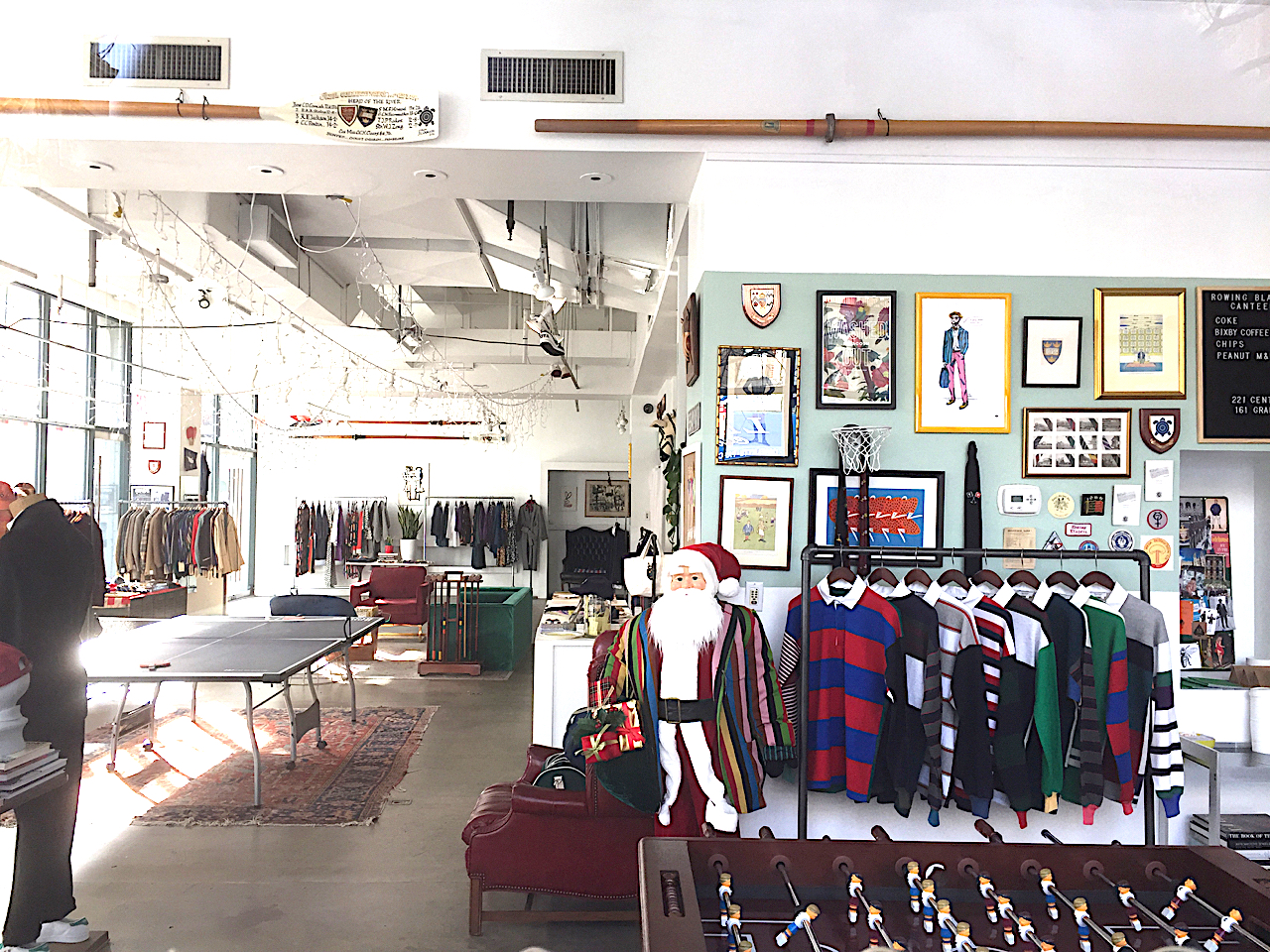 December 31, 2018–It's nearly 2019, and time to starting thinking again about The Boat Race(s), Men's and Women's, in the early afternoon of 7 April 2019.


